Marine Science
- Marine Science Tier 1 Courses
- Marine Science Tier 2 Courses
- Marine Science Tier 3 Courses


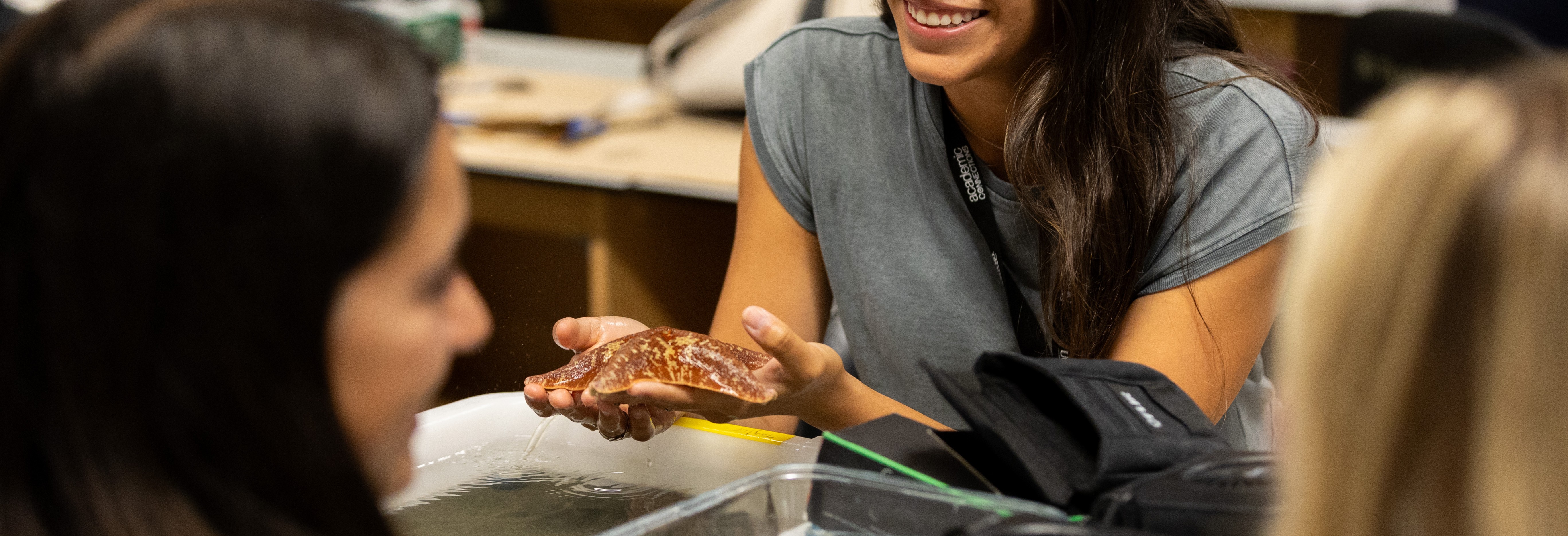


Tier 2 courses provide students with an advanced, multidisciplinary research experience in collaboration with graduate students from Scripps Institution of Oceanography and professionals actively engaged in marine science across various sectors. These courses are designed to immerse students in the research process, allowing them to contribute to ongoing investigations or independently design and implement their own projects. Areas of study may include, but are not limited to, California coastal ecology, coral reef ecology and restoration, animal physiology, thermodynamics, metabolic processes, and fisheries science.
Field-based excursions to diverse marine ecosystems—such as intertidal zones, salt marshes, and coastal habitats throughout the San Diego region—are a core component of the program, offering students direct engagement with the environments they are studying. For students participating remotely, certain research projects have been thoughtfully adapted to include at-home laboratory components, ensuring accessibility and continuity of hands-on learning regardless of geographic location.
Investigating Human and Climate Impacts on Oceans and Biodiversity
Have you ever envisioned designing your own research project, investigating novel scientific questions, and communicating your findings in a scholarly context? The Tier 2 Summer Commuter Course provides a unique opportunity for select students to engage in immersive, hands-on research at the Scripps Institution of Oceanography. Participants will be matched with research themes that reflect their academic and scientific interests, fostering meaningful engagement with topics at the forefront of marine science.
Each research theme is led by subject-matter experts who provide mentorship and professional insight, guiding students through the research process—from hypothesis generation and experimental design to data analysis and presentation. This experience offers aspiring marine scientists early exposure to the rigors and rewards of scientific inquiry, equipping them with practical skills, critical thinking abilities, and a deeper understanding of the research process within a real-world scientific setting.
Research Themes
Thermal Biology: Exploring Climate Change Impacts on Coastal Organisms (Lead: Sonya Timko)
Coastal ecosystems such as wetlands are highly accessible and ecologically rich environments, offering significant commercial, recreational, and educational value. However, they are increasingly vulnerable to climate-driven threats such as rising temperatures, sea-level rise, invasive species, and pollution. As global climate change intensifies, effective monitoring of these ecosystems becomes essential for understanding and mitigating its impacts.
Thermal imaging cameras, which detect infrared radiation emitted by warm objects, are now widely used in ecology to study temperature variability and identify heat stress in marine organisms. In addition to imaging, students can also assess heat stress by measuring changes in metabolic rate (e.g., oxygen consumption), respiration, behavior, and fluorescence —such as altered movement, feeding patterns, or habitat use. Together, these indicators help reveal how organisms respond to thermal extremes. Students will be working within our UC Reserves System and present their final posters at an informal poster session with our partners, at Birch Aquarium. See our 2025 projects here.
Topics Include:
Field Genomics for Ocean Health: Exploring Marine Biodiversity with eDNA (Lead: Christian Johnson, Nicole Yen; Support: Dr. Ariel Rabines)
Students in our Field Genomics for Ocean Health Research Pathway will play a pioneering role in biomonitoring efforts across San Diego by utilizing environmental DNA (eDNA), a non-invasive method that detects genetic material shed by marine organisms into the water, to better understand both ecosystem and human health. By collecting and comparing samples from three distinct coastal environments 1) La Jolla Cove, a high marine mammal–use site with resident sea lions and seals; 2) Dike Rock Tide Pools, a dynamic rocky intertidal ecosystem; and 3) Scripps Pier, representing a more open coastal and ocean-influenced site—students will investigate how biological communities shift across habitats and how varying levels of wildlife presence and human activity shape microbial and eukaryotic biodiversity.
Students will assess ecosystem health at the community level using both conventional field techniques, such as water quality testing and quadrat sampling, and cutting-edge molecular biomonitoring tools, including metabarcoding and shotgun sequencing, leveraging portable nanopore technology for real-time genomic analysis. Working within the UC Natural Reserve System and alongside leading researchers, students will develop their own research questions and explore how eDNA can be applied to pressing issues such as pollution, climate change, biodiversity loss, and public health challenges. Through this hands-on experience, they will generate and interpret real-world genomic data and present their findings in an informal poster session with program partners at Birch Aquarium, positioning themselves not only as learners of ocean science but as active contributors to understanding and protecting coastal ecosystems. See our 2025 projects here.
Topics Include:
Space is limited, and students will be accepted on a rolling basis. Applications are subject to closing earlier should the program meet its enrollment capacity.
What are 90000 level pre-college units?
Are award of completion certificates available?
How do I request an official/unofficial transcript?
How do I access my grade report?
What are 90000 level pre-college units?
Courses numbered 90000-99999 are non-credit-bearing, pre-college-level courses designed to provide an opportunity for students to explore academic interests or prepare for college admission. Research Scholars pre-college units may be transferable for secondary school credit at the discretion of the receiving institution. Students should discuss the transferability of individual courses with the registrar of their secondary school prior to enrolling.
Are award of completion certificates available?
Award of completion certificates are not available for the courses. However, students are welcome to request a transcript or downloand and print their grade report by logging in your MyExtension here.
How do I request an official/unofficial transcript?
For instructions on how to order and pay for an official/unofficial transcript, please click here. If you’ve never ordered transcripts through Parchment before, you will need to register for a Parchment account. Details can be found from the link above. All transcripts will be printed and delivered by one of the methods listed here. Transcript requests are processed by Student Services. Should you have any questions, please contact them at unex-reg@ucsd.edu.
Please note that when grades are not yet posted for the current term, you can still request an official transcript by selecting the "Hold for current quarter grades" option on the transcript request form, which instructs Student Services to wait to send the transcript until all current grades are officially posted to your academic record. This process ensures the transcript reflects your most up-to-date academic performance before it is sent to the requested recipient.
You can also view/download your grade report by logging in your MyExtension here without needing to make a payment.
How do I access my grade report?
Your final grade reports will be available in MyExtension within three weeks after the last day of class. For current blended, hybrid or online courses, you can access grades for individual assignments through Canvas or by contacting your instructor.
Students will receive a full refund for a cancellation or withdrawl from a course if this is requested 15 business days in advance of a course start date. Refunds are not granted for students who are dismissed from the program.
You can drop courses online in a few easy steps:
Or submit a written drop request:
You may file a petition for an exception to the refund policy if you are unable to continue enrollment for one of the following reasons:
Refunds will take approximately four to six weeks to process. Refunds are issued in the same method of payment (check or charge) of payment to the program.
You can also learn more about the program by visiting our Research Scholars Marine Science website: